Street Art

It was the 13th of April 2019, on a clear spring morning. On this specific morning, as I always do on saturday, I drove to the downtown of Jacksonville, FL. Usually, every Saturday before I go to work, I have a hobby of walking in the area of the Landing. Jacksonville Landing is my favorite place, especially when I want to walk and refresh myself. On that sunshine morning one thing caught my attention. It was in front of The Museum of Contemporary Art building and Hemming Park, and there was the exhibition that different bodies participated in where small business owners try to advertise their products.

On the right side of The Museum of Contemporary Art building was the space provide for street art. The organizer gave several color chalk with an eraser, and a whiteboard that was mixed with different kinds of nonsense words for anyone to write what he feels and use the mixed word and make his own Dada Art.

Dada or Dadaism was an art movement of the European avant-garde in the early 20th century, with early centers in Zürich, Switzerland, at the Cabaret Voltaire (circa 1916); New York Dada began circa 1915, and after 1920 Dada flourished in Paris. Developed in reaction to World War I, the Dada movement consisted of artists who rejected the logic, reason, and aestheticism of modern capitalist society, instead of expressing nonsense, irrationality, and anti-bourgeois protest in their works. The art of the movement spanned visual, literary, and sound media, including collage, sound poetry, cut-up writing, and sculpture “Dada”.

In this blog, I want to concentrate on one specific Dada Art which is used cut-up writing on the exhibition. It said, “Shine beyond the blue sea; Express sounds with love; Want artistic symphony; Whisper from cool wind; Trace light but feel music.”

I tried to understand the feelings of the cut-up writer while he does this. He probably thinks about life as such a mystery. He just wants to find his place, and he shall not dwell on the hardships of his past because it is over. Instead prefers enjoying the moment and hopes to see another day mixing his idea with the trending music. I sketch in my mind this person using his particular time evaluating himself and looks learning from the past and feeling with confidence, enjoying himself at the time.

Reference

Artists by art movement: Dada – WikiArt.org. https://www.wikiart.org/en/artists-by-art- movement/dada#!%23resultType:masonry

Maalan Jiraa!

“Maalan Jiraa” is the single clip Afan Oromo song by Artist Hachalu Hundessa and beautifully produced by Amensisa Ifa. Hachalu Hundessa is one of the young, energetic young Ethiopian, Afan Oromo Artists. All Oromo communities live in Ethiopia as well as in Diaspora believe that “Maalan Jira” was the first song that creates awareness of displaced farmers around Addis Abeba (Finfinnee), the capital of Ethiopia. In Ethiopia “Maalan Jiraa” give momentum to the struggle that started by a youngster (Qeerroo) and accelerates the Oromo Protest movement.

The lyrics in this clip talk about love, but it has the political intention and advocates for the farmers. “Maalan Jiraa” has the meaning that I am not alive. The core message of the “Maalan Jiraa” single is the farmers living in the surrounding areas of the capital are displaced without sufficient composition from their inherited land. Due to this reason, each farmer and their family are vulnerable. In addition, their culture, language, beliefs and administration system substituted by other ethnic culture and monarchy administration system. As Hachalu explains well in one of his interviews, the displacement started from the center, Gullele. Gullele is almost considered as the downtown of Addis Abeba. Hachalu tries to illustrate development should not be the tool of ethnic clearance of the governing entity.

Finally, I wish this song translated to the English language and distributed in the world. The translation of “Maalan Jiraa” to the English language helps other vulnerable community due to the development and maximize their voice to reach out to the world. As we reach and live in the 21 century each culture, belief, local administration system and language considered among the reach values of one territorial country. It is mandatory that development is all-inclusive and play its role by supporting provincial human capital, keeping historical names as they are, and advance the local belief and administration system. We can mention several historical mistakes done internationally in the name of development and civilization in previous. For example, the mistake done on Native America in central part of The United State and Aborigine in Australia was the most significant. For this reason, the music such as “Maalan Jiraa” advocate artistically to the cause of exposed community.


In conclusion, if the single “Maalan Jiraa” song translated to the English language, it may increase its popularity and gain more advocates. Development has to be inclusive and play its part in advancing the local potential. Also, development by keeping local beliefs, cultures, and administration systems, can contribute to history. Music is the most significant communication in the world. Even if people don’t understand the language that you are singing in, they still know good music when they hear it. 

You can wach the clip by clicking the link below

https://www.youtube.com/watch?v=Wv3he6CGF3E

Visit of Hispanic Cultural Center

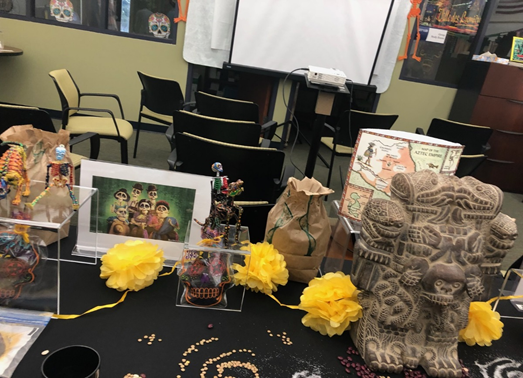
Collaborating with my classmates, I visit the Hispanic Cultural Center which found in FSCJ Dear Wood Campus, Jacksonville. FL. I can say that I learn a lot of ancient history in Central America. The collection in the small room was impressive. In the little place there were many different pieces of models, and pictures that give a more visual figure to the visitor.

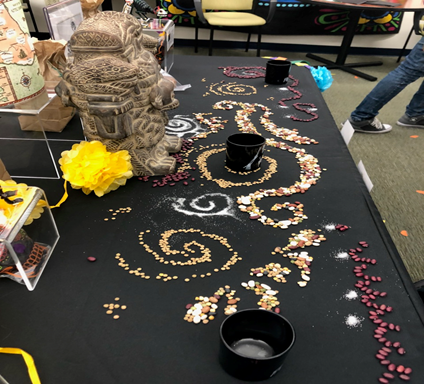
During the visit what grasp my attention was the collection of Mexican items, and the history told after the   “ Dia de los Muertos” or the day of the dead celebration. The “ Dia de los Muertos”  is a celebration celebrated every year on October 31 throughout Mexico for the three following days. As I observe this celebration is considered an integral part of the Mexicans identity, and the identity combination of Mixo American culture, European believe and Spanish culture. When you enter the door in the middle of the room, there was a decorated Altar. An Altar is a table or flat-topped block used as the focus for a religious ritual, especially for making sacrifices or offerings to a god or goddess purpose. There were several items on this Altar. I learn a lot of explanation and tags on each item, which found on the altar. On the date of   “ Dia de los Muertos”  the Altar decorated with different items such as water  that represents purity and a source of life, salt is a symbol of wisdom, mat offered for the rest, toys for the children, and favorite foods adults enjoyed it, as well as there, was incense created good smells around. On the left side of the room, I observed that a lot of gods and goddesses inherited from the previous Mesoamerican civilization and there was a lot of legends told about the goddesses. I was surprised by those legends mentioned in the middle of the tour, and still many people in Mexico believe in those legends.

Finally, the main thing I learned the celebration is to show death is not the end, but it is the beginning of a new journey. Mexican think this journey is the journey to the final resting place especially for sol, and they also believe this journey has nine challenging obstacles. In addition, at the end of the tour, I learned some steps of Mexican cultural dance, and we enjoyed the music performed in a separated room. 

In conclusion, I learn a lot from the visit to the Hispanic Cultural Center. The day of the dead celebration is the celebration of that include the Mixo American culture, European believe and Spanish culture. In addition, it shows that death is not the end, but the journey to the final resting place.  

MY CULTURE

A word culture has a lot of different definitions. For some, it refers to an appreciation of good literature, music, art, and food.  For others, it related to natural backgrounds and environment. The English Anthropologist Edward B. Tylor in his book, Primitive Culture, published in 1871. He defines culture as “that complex whole which includes knowledge, belief, art, law, morals, custom, and any other capabilities and habits acquired by people as a member of society.” I agree with the way Tylor define culture.

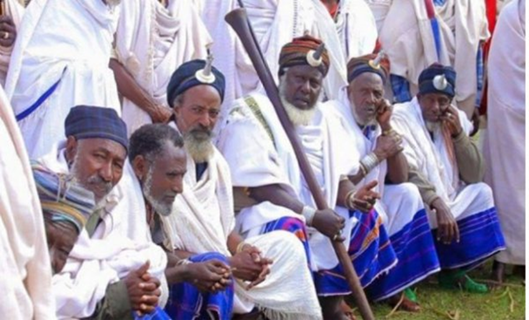
 Personally, both of my parents are from a similar background, they born and grow up in Oromia, Ethiopia. I am also growing and rise in Oromia, Ethiopia; some components promote our tradition and make up our family cultures, such as belief, custom, dressing and a verity of foods. Besides, law and administration also have a significant place in my lifestyle.  “Gadaa system” is traditional social stratification and administration system that is well known in my culture. In Ethiopia, the majority who are coming from Oromo ethnics background like me mandatory pass through this cultural system. The Gadaa system is an indigenous open, democratic system trained among the Oromo nation of East Africa for the last six hundred years. As a system of governance, the Gadaa functions in stages (often ten stages with eight years separation). Unlike other, Western self-governing systems, the Gadaa system has five permanent political parties whose members assume leadership once every eight years. Within forty years, all five parties assist their nation organizing ‘One Gadaa.’ Back in 2003 G.C, I got a chance to attend a big ceremony of transferring power between Horata to Bichile party in Boku chitu, Ambo. The place where my grandparents, as well as all family by my father side, live on, and it made for me leisurely participate the whole session, moreover grasps knowledge and understand how depth cultural value for one specific community.

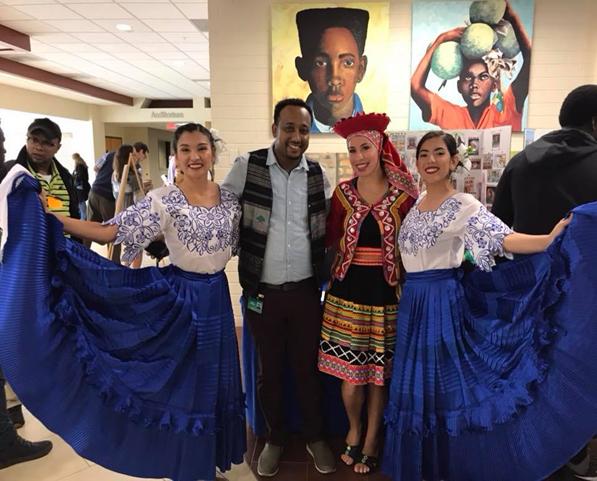
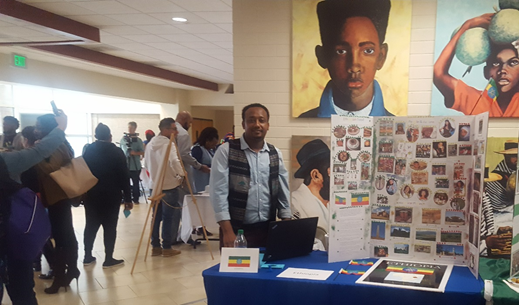
UNESCO: register Gadaa system, an indigenous democratic socio-political system of the Oromo Inscribed in 2016 on the Representative List of the Intangible Cultural Heritage of Humanity. As a family tradition, my elders teach me a lot of component of Gadaa system which preaches peace, finding the truth, equality, and peaceful power transfer because of this reason I call myself, I am the son of Abba Gadaa. Finally, I am interested in traveling and attending indigenous culture, ceremony as well as eager to know the driving knowledge behind every cultural institution. I am open to learning from my peer groups especially in my college. For this reason, I participated and took part representing my country in the international festival day on November 15, 2018, G.C prepared by FSCJ international club in downtown campus.

 I like most where special ceremony or religious celebration takes place, those different age group of people adds the supplement to the tradition by wearing a unique cultural dress. In conclusion, Gadaa system and its components are my cultures and what i am trying to discuss in the beginning, let me ask you one question who are you? And in what way you understand the culture? 

–    Link for YouTube documentary about Gadaa system